

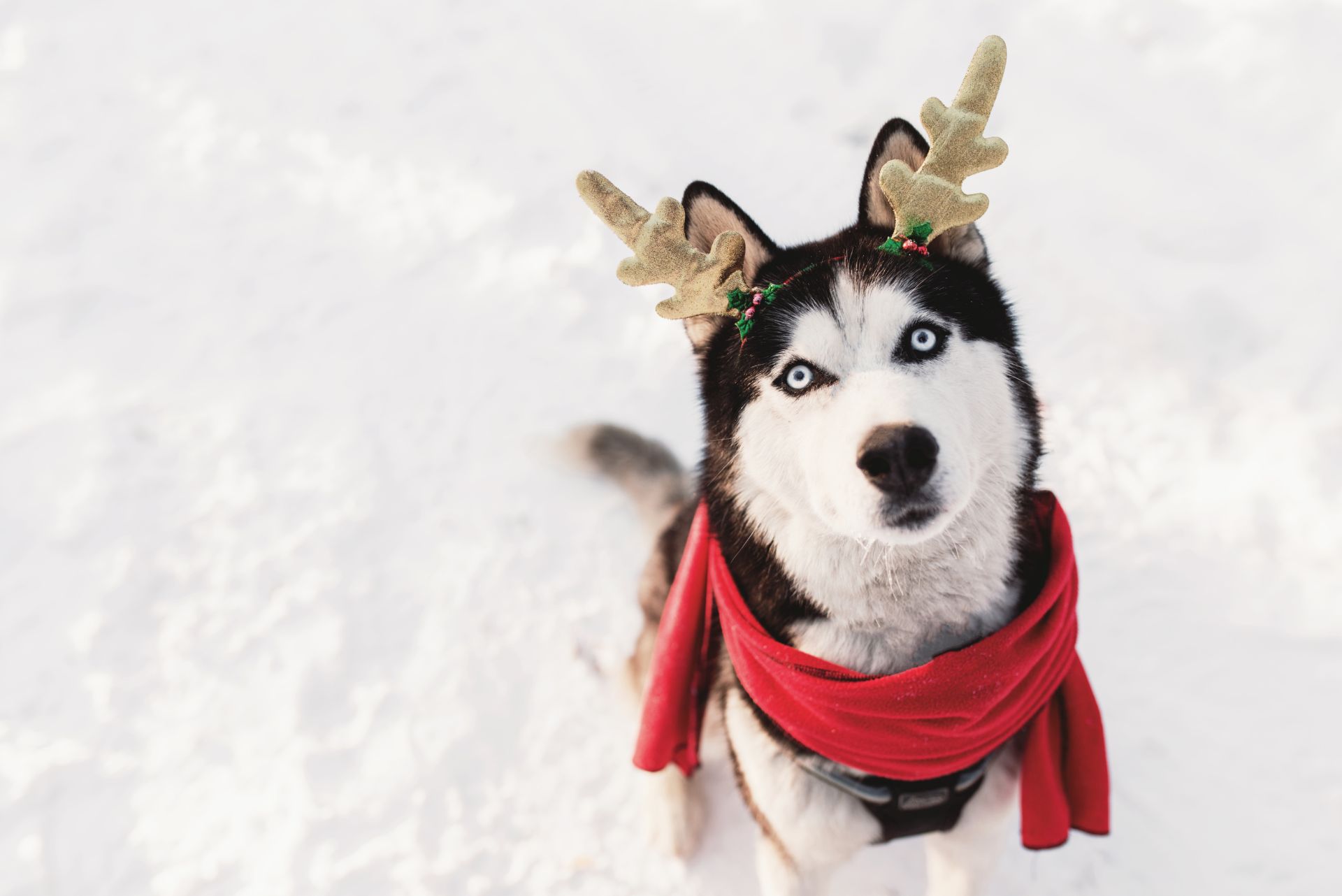
Transitioning to a new home is a big adjustment, and winter adds an extra layer of challenge. These tips will help your rescue stay safe, warm, and happy all season long.
Safety and Shelter
Mind the Past: Your dog’s history may not be known. If they were a stray or lived outdoors, they may have a lower tolerance for cold than you expect, or they might try to seek out old, unsafe habits (like hiding under porches or cars). Never leave them unattended outside for long periods.
The 7-Minute Check: Cold weather increases the risk of mechanical failure or fire. Check your dog’s crate and bedding frequently. If you use space heaters, ensure they are secured and the dog cannot knock them over.
A Warm, Secure Den: Provide a warm, comfortable bed, raised slightly off cold floors if possible. For dogs with anxiety, a blanket draped over their crate can create a cozy, secure “den” that helps them feel safe from the elements.
Danger Zones (Antifreeze): Antifreeze is a deadly poison but has a sweet smell. Keep all car chemicals stored away and immediately clean up any spills in your garage or driveway.

Walks and Outdoor Safety
Paws and Chemicals: Road salts and ice melt chemicals can irritate and burn paw pads. After every walk, always wipe your dog’s paws with a warm, wet cloth or dog-safe wipes.
Tip: Consider using dog booties. Start with short training sessions inside, using lots of treats, as many rescues need time to adjust to footwear.
Leash Security is Paramount: Winter weather can be distracting (snowplows, icy ground). A sudden slip or fright could cause your dog to pull out of their collar. Always use a harness or a double-leash system (leash clipped to both the collar and the harness) for extra security, especially if your dog is a flight risk.
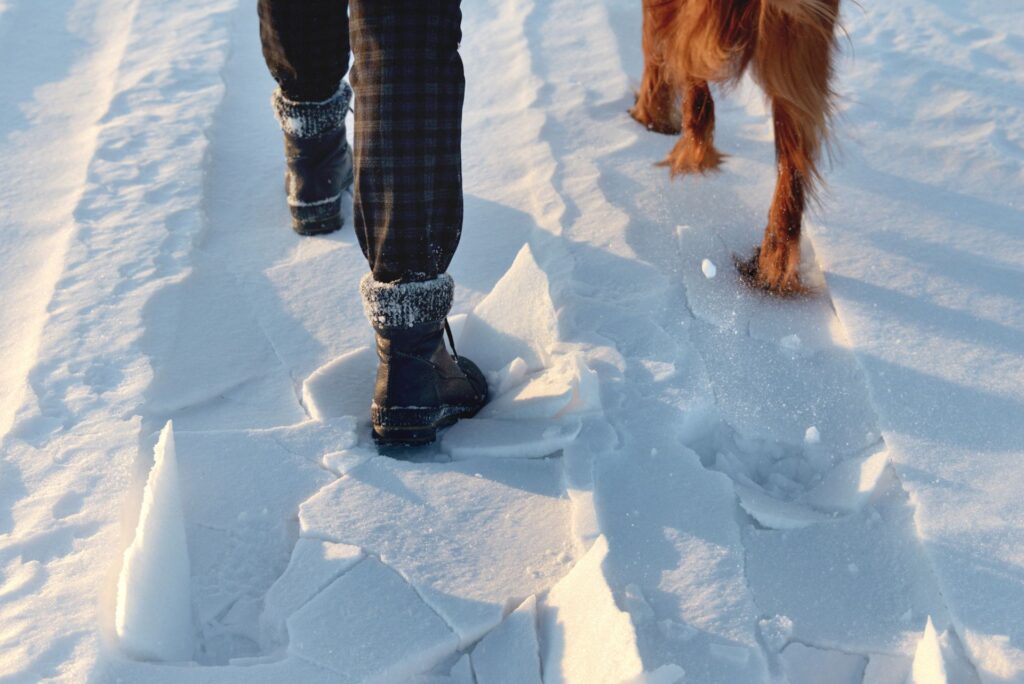
Watch for Ice and Slips: Be mindful of slipping on ice, as a fall could cause injury. Keep walks short on very cold or icy days.
Health and Nutrition
Calorie Adjustment: Dogs burn extra calories to stay warm in the winter. If your dog spends more time outside, they might need a slight increase in food. However, if they are less active, they might need a slight decrease to prevent weight gain. Consult your vet for the best plan.
Dehydration Risk: It sounds counterintuitive, but dogs can get dehydrated just as easily in the winter. Ensure their water bowl is always full and check outdoor bowls frequently to prevent them from freezing.
Skin and Coat Care: Cold, dry air can cause itchy skin. Add a vet-approved supplement, like omega-3 fatty acids (fish oil), to their food to support a healthy coat and skin.
Mental Stimulation & Bonding
Beat the Cabin Fever: If outdoor walks are short or canceled due to weather, your dog still needs to burn energy. Use indoor enrichment games to prevent boredom and destructive behavior:
Examples: Frozen Kongs, puzzle toys, “Find It” games (hiding treats for them to sniff out), and practicing new tricks.
Cuddle Up: Use the cold weather as an excuse for extra snuggles. Quality time helps solidify the bond of trust that is so important for rescued dogs. A simple session of brushing, belly rubs, or quiet time on the couch goes a long way.
Listen to the Clues: If your dog shivers, lifts a paw, whines, or tries to turn back toward the door, end the walk immediately. Rescues are learning to trust you; respecting their signals builds confidence.

Remember the “Rule of Threes”
When working with a rescued or newly adopted dog, be patient. Many behavioral specialists use the “Rule of Threes” to describe the adjustment period:
3 Days: The dog is often overwhelmed, scared, and shuts down (may not eat, drink, or show their true personality).
3 Weeks: The dog starts to relax, their true personality emerges, and they begin to understand the routine and boundaries.
3 Months: The dog fully integrates into the home, develops trust, and is comfortable with their new family and environment.
When to Contact a Professional
If you notice any of the following, do not hesitate to reach out to your veterinarian or a certified professional dog trainer/behaviorist:
Sudden Changes in Behavior: Extreme lethargy, refusal to eat or drink, or sudden aggression.
Persistent Limping or Pain: Especially after a walk on icy ground.
Excessive Itching or Skin Redness: This could indicate an allergy or sensitivity to dry air/salt.
Destructive or Excessive Anxiety Behaviors that do not improve after the three-week mark.

Contact & Resources
| Resource | Why You Might Need It | Contact/Note |
| Your Veterinarian | For all health concerns, medication, and nutritional advice. | Keep their emergency number handy. |
| Adoption/Foster Agency | For behavioral support, return-to-home protocols, or history details. | They are your first line of support after adoption. |
| Local Pet Store | For quick needs like booties, salt-safe paw balms, or puzzle toys. | Look for dog-safe ice melt products. |
The True Gift of Winter Warmth
Welcoming a rescue dog into your home is an act of deep kindness. While winter presents extra challenges, remember that every extra blanket, every gentle paw wipe, and every cozy cuddle is a deposit in their bank of trust. You are giving them the gift of security, often for the very first time.
Thank you for being a part of their second chance. Share your journey; you never know who you might inspire to open their home next!
Ready to Open Your Home?
If these tips have inspired you, and you are ready to make a difference in a dog’s life, there are wonderful companions waiting for a warm, loving home right now.
Find your new best friend today!
Visit our Adoption Page
Contact Us to speak with an adoption coordinator.